
The negative impact of self-appointed employee influencers on company culture
Published
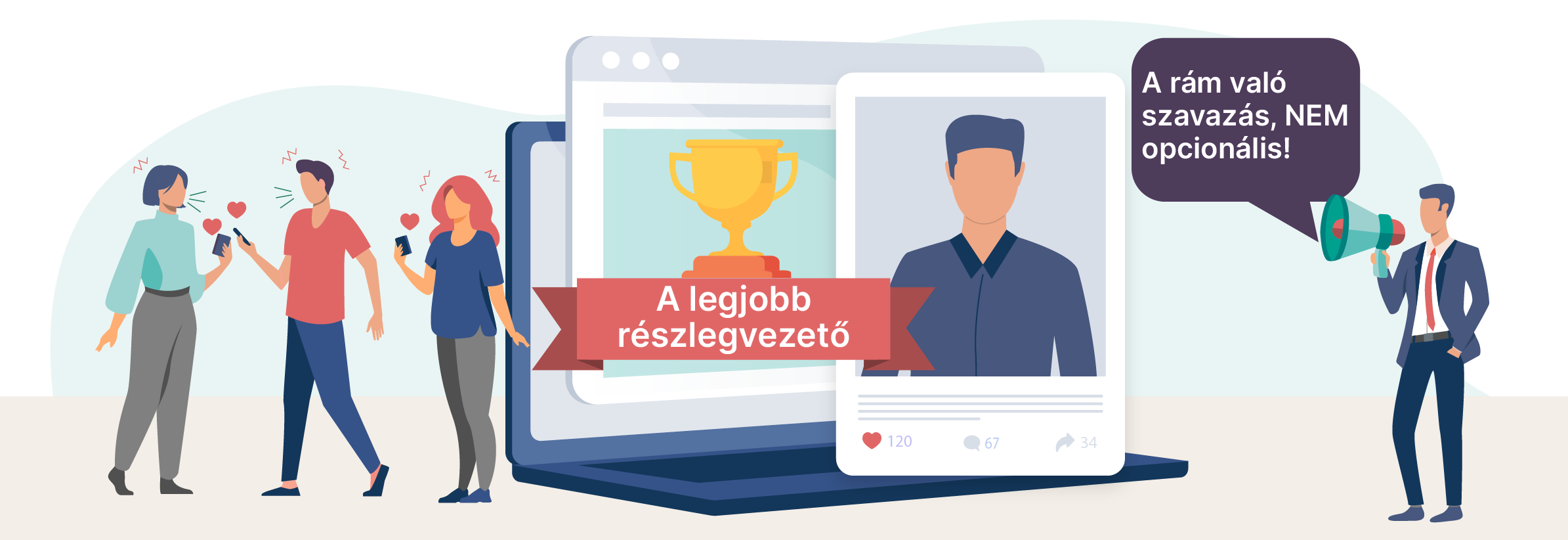
It is quite a matter of debate what effect the internal social network has on company culture, and what role it plays in shaping it. There is the view that it helps forge a strong work community and improves communication between colleagues. This may indeed be possible if the company allows the use of the corporate social network within a set of rules. Nevertheless, according to surveys, 45% of companies give no guidance whatsoever on the form in which, how, and for what this company platform may be used. And even among those that do regulate it, problems still arise. This is supported, at least, by the research finding that 70% of companies have already carried out disciplinary proceedings over misuse of the social network. This too proves that the corporate social network has to be supervised and regulated, which, let us admit, is a time- and energy-intensive task. On top of that, from a mental-health perspective it is not a very good choice to bring social media into the company culture.
The corporate social network as a stress factor
There can be many reasons why the corporate social network becomes a stress factor for employees:
- due to information overload - frequent notifications, new messages, post updates
- due to comparisons - colleague XY is found funnier, gets more positive feedback than colleague ZX
- due to voicing opinions - this can stem from the employee feeling pressure to share their opinion on the corporate social network, but also from what reaction their opinion triggers in colleagues
- cyberbullying (online harassment) - when one or more employees verbally abuse one or more targeted employees, which the "abusers" often pass off as trolling or teasing
- addiction - when employees cannot detach themselves from the social network, live their lives here, expect recognition and positive feedback from here, and vent their frustrations here
Why is it important to be aware that the social network can trigger stress in employees? Because according to a UK survey, 40% of resignations can be traced back to workplace stress, and 35% of employees have already considered resigning because of stress. The American Institute of Stress has published similar figures. On top of that, they found that 80% of American employees experience workplace stress. The situation is probably similar in Hungary.
Based on all this, we can conclude that in order to retain the workforce, we have to strive to reduce workplace stress, not increase it.
This is especially true of workplaces where the majority of employees belong to Generation Y or Z. According to American statistics, 70% of Generation Z struggle with anxiety and/or depression. And according to 2021 data, 57% of Generation Y struggle with workplace stress.
So if the corporate internal social network represents a huge source of stress, then it has no place in the company culture. A different solution has to be used in order to establish effective internal communication.
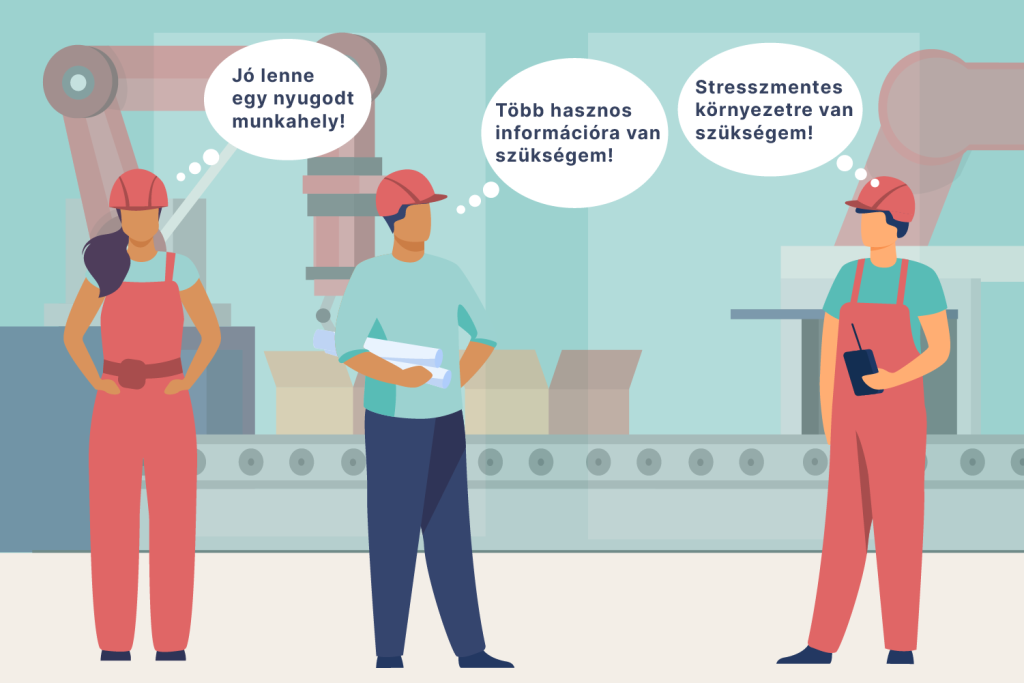
Are you sure every employee wants a corporate social network?
Before we answer the question, let us reflect on what we use social media for in our private lives. Perhaps to:
- exchange messages with our friends
- "spy" on our acquaintances, that is, to sneak a look at what everyone's life is like (at least the life they show on the social network)
- read "news", that is, scroll through the posts that appear on our feed
- watch funny videos
- play games
- show off and feed our ego on external feedback so that we feel better about ourselves
- set others straight, since the social network is there for us to share our opinions, lecture others and argue with them when there is no agreement between us
- vent our frustration by communicating with others in a disparaging way, or by simply piling negative emojis and GIFs onto the social network
Which of these, do you think, is an activity that supports increasing the company's performance?
Which one contributes to establishing more effective corporate internal communication?
And which one helps create a pleasant work environment and company culture?
You probably see it too: these activities barely, or do not at all, move the company and the work community forward. So we can conclude that in most organisational cultures there is no place for social media. Of course, there can always be exceptions. For example, companies that employ performers and/or influencers. At such organisations, an internal social network can also have a useful role.
The role social media plays in our lives is mostly limited to the following:
- entertainment,
- recharging,
- relaxation/unwinding,
- uncensored free expression of opinion
If the corporate social network does not provide all of this, then employees probably do not even want to be on it. And in that case it is quite doubtful whether, and when, the money, time and energy invested in setting up the corporate social network will pay off. If ROI matters to management - and experience shows that it does - then instead of a corporate social network it will choose another, more effective solution for shaping the company culture and communicating with its employees. Such a solution can be a chatbot-based communication application, like CHEQ, whose introduction can, moreover, pay off within as little as 3-6 months.
In what roles are employees present on the corporate social network? How do they affect company culture?
Let us suppose that management nonetheless decides to introduce a corporate social network in the hope of better internal communication. In this case, employees may take on the following roles if they are compelled to join the network.
1. The silent participant, or the observer
These employees follow the internal social network, but only very rarely share posts, comments or any kind of reaction. They are not particularly interested in gaining a reputation among their colleagues, so they also avoid drawing attention to themselves. Often their profile is not even fully filled in, and they are rather passive when it comes to building connections. If someone reaches out to them, they are usually open to company, but they rarely take the initiative.
2. The active participant
These are the employees who deliberately build and nurture their working relationships, but are not obsessive social-network addicts. They actively take part in communication, share posts and comment. They initiate contact with colleagues, and it does not bother them to be in the spotlight, even though that is not necessarily their goal. That is why they do not overdo their presence on the social network.
At the same time, we can also place careerists in this group, who want to draw attention to themselves through their activity on the social network too, to build the right connections or a support base that helps them climb the career ladder as quickly as possible.

3. Opinion leader
Every company has one or more opinion leaders. They are employees whom colleagues pay attention to and whose word they believe. Even more so than the word of management. According to a survey, 70% of employees consider information received from co-workers (opinion leaders) more reliable than what a designated company representative communicates through the company's official channels. This can be quite dangerous, especially if the opinion leader shares untrue, unfounded claims that affect the company negatively.
Opinion leaders are not necessarily the most active on the internal social network; however, they stand out among their colleagues because of their knowledge, experience, background or other perceived value. And colleagues follow them of their own accord.
4. Social unicorn
These are the co-workers who are the most active on the social network. You can read their posts and comments at every turn. They have an opinion on everything and weigh in on everything. They have a huge role in shaping company culture and pose an enormous risk to the company, since every member of the work community reads what they post. If they spread false information or speak negatively about the company or their tasks, if they troll or stir up arguments and conflict, it reaches everyone and leaves its mark on the general mood. In addition, they like to be at the centre of attention, and they like to be praised and fawned over.
Viewed in this light, it is perhaps no wonder that most social unicorns have narcissistic personality traits. They think they deserve special treatment and are more important than others. According to the literature, a characteristic of the narcissistic behaviour group is also that they exalt themselves while discrediting, belittling and diminishing others. This is also why it is so risky to give room to these individuals within a corporate social network, as through their conduct they can poison not only their immediate colleagues but every other co-worker as well, thereby damaging the company culture and driving away valuable workers.
5. The reluctant poster
It is also not rare for employees to use the corporate social network because of workplace or social pressure. The HR department, marketing, the staff responsible for internal communication and some managers are active on the corporate social media because their role means the company expects it of them. It may be that, because of their personality, they would barely or not at all share a post or comment. However, they are compelled to do so because of their job description. It is obvious from a mile away that such posts and comments are not sincere. Indeed, they are highly contrived. And because of this, after a while colleagues do not take these messages seriously either, since there is no way to know how much of it is true and how much is not.
Another group of reluctant posters consists of employees who are compelled to be active on the corporate social network under pressure from their direct superior and their peers. They are the people who, under pressure, always - or at the very least very often - leave positive comments or other reactions under their manager's messages, hoping to look forward to a calmer, more peaceful workday. This kind of expression is not sincere. That is why, as soon as other employees notice what kind of charade is going on in one work group or another on the social network, this kind of communication can lose its credibility.
The 4 types of narcissism and their negative effect on company culture
We can distinguish 4 types of narcissism depending on the form in which it manifests.
- Grandiose narcissists, who are egotistical and arrogant. They like to be in the spotlight and are hungry for power. They think that all of the company's success is thanks to them.
- The vulnerable ones, who blame the world and other people for everything, especially for not acknowledging their greatness and genius. If a task fails, then others are responsible for it - those who did not listen to them and did not follow their advice.
- The socially sensitive ones, who talk and boast about what good deeds they have done for others. In reality, however, it is not a selfless act at all, nor is it even driven by empathy. They work overtime and help their colleagues so that others think well of them and give them recognition.
- The malicious ones, who do not shy away even from cheating, lying or manipulating their peers in order to achieve their own goals.
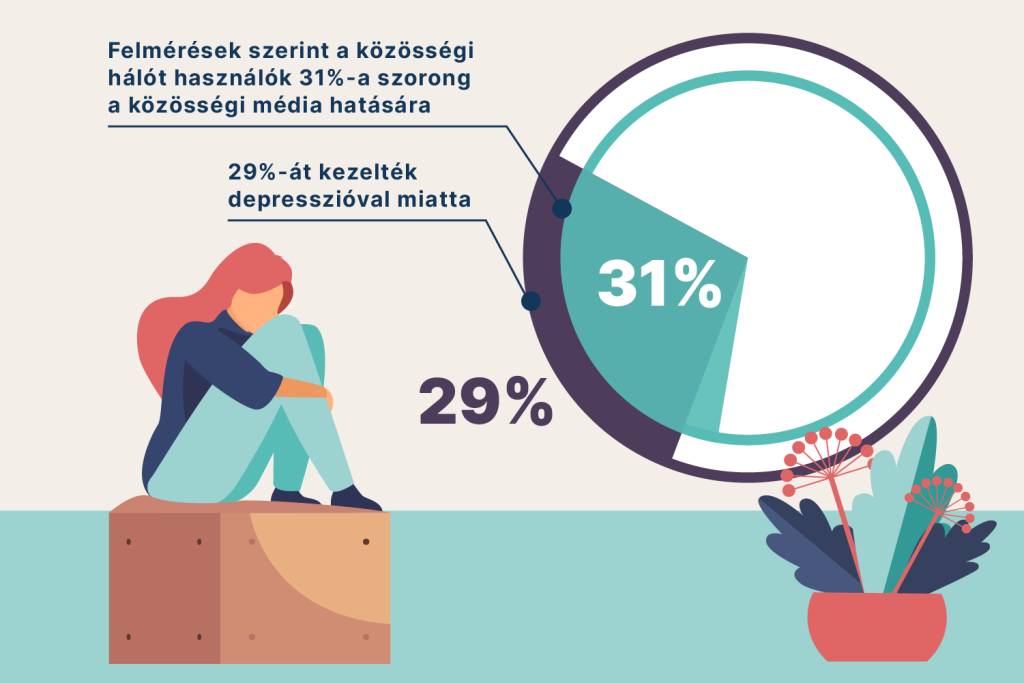
Each of these is a form of behaviour that can only be endured in the short term with a healthy state of mind and a sound mind. In the long term, they wear everyone down. Co-workers who come into contact with narcissistic colleagues sooner or later become frustrated, anxious, and may even struggle with self-esteem problems. According to surveys, 31% of social-network users experience anxiety as a result of social media, and 29% have been treated for depression because of it. In addition, their performance deteriorates and they increasingly call in sick, just to catch their breath for a moment from the pressure of the narcissistic colleague and the social network. It is also not rare for employees to resign because of narcissistic colleagues.
Of course, throughout history there have always been cases where someone had to work with one or two narcissistic co-workers. However, the corporate internal social network provides an enormous playing field for narcissistic employees. As I have already mentioned, as a result of social media, narcissistic colleagues can poison the minds and souls not only of their immediate co-workers - until those decide to resign because of the stress they experience - but of all the other co-workers as well, whether that means 100 or 1,000 employees. To avoid this, establishing directed corporate internal communication is a better choice than a corporate social network.