
10 tips to reduce change fatigue
Published
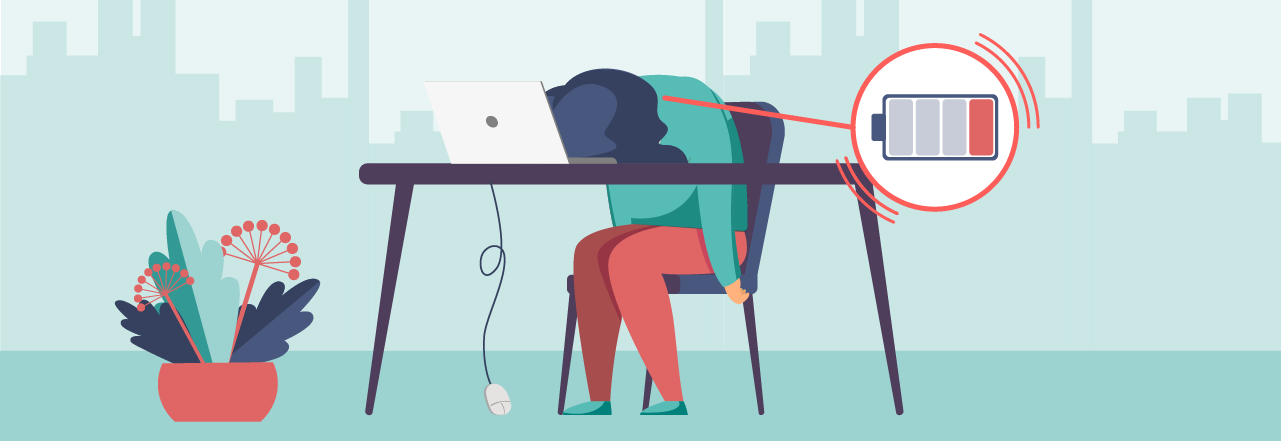
We all know that change is the only constant in life. However, the sheer volume and frequency of change can wear down even the most flexible people. Capterra's research also points to this, showing that in recent years the amount of change that the average employee can handle has halved. And although we would like to blame the Covid-19 pandemic for this - when several significant changes hit employees at once - we have to admit that it was only the last straw. Change fatigue largely develops because of incomplete, vague or otherwise problematic communication. By the end of the article you will agree with this too.
What is change fatigue
Change fatigue is essentially a general feeling of tiredness, apathy, indifference or resistance towards constant challenges. All of this is usually triggered by poorly handled and inadequately managed organisational changes. Over time this fatigue can leave its mark on the general mood, and can negatively affect employees' attitudes. In addition, it is not uncommon for change fatigue to reduce employees' performance and damage morale. And ultimately it can contribute to increased staff turnover too. Furthermore, it can hinder the company's ability to successfully weather future changes.
What are its warning signs
At first it can be hard to decide whether an employee is momentarily tired because of a tougher work week, perhaps a weekend spent partying, or because simply too much change is going on around them and they are struggling to cope with it. We do not perceive the smaller signs as a danger, since we gradually get used to them and then they seem bearable. In fact, we even explain them away as natural - just so we do not have to do anything about it. However, if we are attentive to the qualitative changes happening in our environment (stronger competitors, lost customers, departing colleagues), then we can notice the signs of persistent fatigue, which we can handle effectively if we spot them in time.
But what are these warning signs?
- anxiety because of the changes
- increasingly frequent and louder complaining about the changes
- switching off - no longer asking, no longer paying attention
- persistent negativity, greater scepticism and cynicism than usual
- general distrust towards management and towards change
- constantly questioning management's intentions
- growing indifference towards the changes
- increasingly frequent absences, sick leave, lateness
- strong resistance to the changes and obstruction of them
- stress because of the change
- visibly and persistently tired employees
- loss of the capacity for innovation and renewal
- lack of interest in development opportunities (e.g. company training)
It is important that we recognise the signs of fatigue. But it is even more important that we are able to handle them effectively.
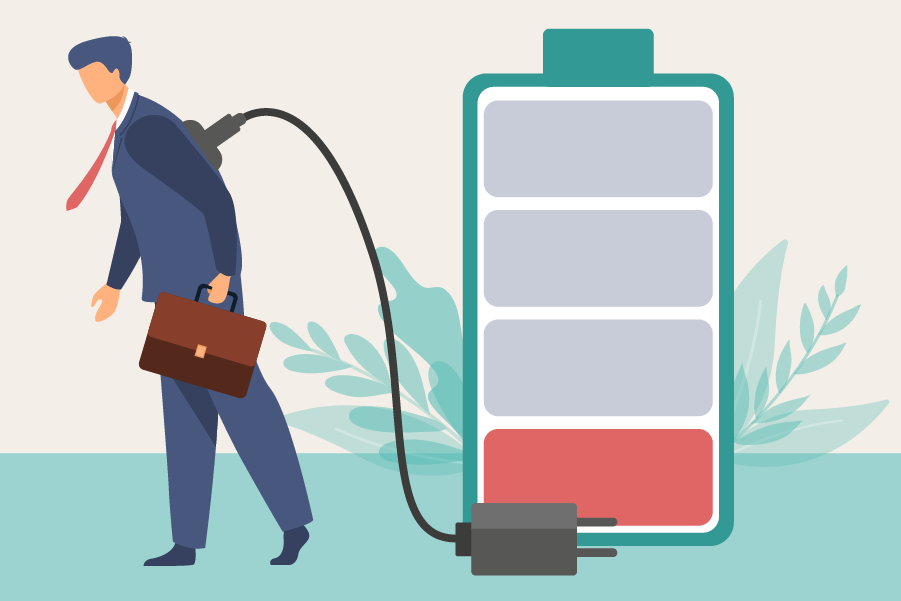
Here is how to reduce workplace fatigue
According to Gartner's 2022 survey, 54% of the HR leaders surveyed believe that they are struggling with employee change fatigue. In addition, 71% of the American employees who took part in Capterra's research also complained of being overwhelmed by change.
This is the case because adapting to new situations and expectations is a learning process, and our brain needs energy for learning. The question is, where can we draw energy from?
Since change is already part of our everyday life, and there is no development without it, as a leader and HR professional you definitely need to master the techniques that let you reduce the workplace fatigue caused by change.
1. Communicate the changes
Regardless of how big a change it is from the company's/management's point of view, whether small or large, you definitely need to talk about it. According to research, a smaller change that directly affects employees' lives, e.g.:
- a team change,
- a new team leader/manager
- a new position
- a new work site, and so on
has 2.5X greater impact on employees' lives than a change of greater magnitude, such as a merger, acquisition or a change in senior leadership.
Changes should, wherever possible, be communicated even before they happen, in order to reduce the uncertainty caused by corridor gossip and speculation. And also to give employees the chance to prepare themselves mentally, instead of suddenly and unexpectedly presenting them with a fait accompli. It is also essential that internal communication be consistent so that it does not cause confusion or distrust (in large organisations this is not always easy to ensure, when information reaches colleagues through many relays).
The cause of negative gossip is, in most cases, the natural human reaction (expecting the worst), which can only be counterbalanced by sufficiently intensive, credible, positive internal communication.
At the same time, it is also important to maintain dialogue during the change, and to listen to the feedback. This helps reduce the stress caused by change. For many people it is enough simply to be able to voice and "talk out" their fears; in other cases it can also be important for them to know that they are being listened to.
2. Connect the dots
When communicating the changes, connect the dots. Explain to employees why the changes are needed. If they understand the reasons behind the changes, then they accept them much more easily. This is especially true if you also tell colleagues what they lose if they do not go along with them and what positive turn can be expected after the changes are introduced.
For example, if you announce that from now on they will receive their payslip in digital form, along with the explanation, through CHEQ, this brings two big advantages from their point of view:
- they quickly receive their payslip, even on the day the salary is transferred, everyone at the same time, wherever they may be
- they do not have to queue and wait for the HR colleague to explain the data on the payslip
3. Acknowledge employees' feelings
Handling change fatigue effectively also involves acknowledging employees' feelings. Let them know that you understand they approach the changes with reservations and reluctance, since these mostly force them to step out of their comfort zone. Acknowledge that the changes may present them with challenges, which some will clear more easily and some with more difficulty. Accept that they are afraid that what they have done so far no longer meets the new expectations, that they are afraid of abandoning old routines and of making mistakes.
At the same time, reassure them of your support too, that they will get all the help they need for the transition to be smooth. In addition, it is also important that you reinforce in them, and represent, the positive vision of the future that the changes can lead to.
Plus one good piece of advice: in your communication about the changes, always strive to phrase things empathetically. For this, though, it is important that you know their thoughts and feelings about the situation very well. A targeted pulse survey or the anonymous questioning option, both of which CHEQ provides, can be a good solution for finding these out. With a pulse survey you can get an instant snapshot of the general mood regarding the changes. And the anonymous reporting and questioning option provides a sense of safety. After all, employees can ask for further information without having to worry about the consequences. And through such honest questions you can learn what employees' biggest fears are, which of course need to be addressed.
4. Set genuine priorities
Every company defines top priorities. However, as we dig deeper, it turns out that almost every activity is extremely important from some employee's point of view. That is exactly why employees often do not know what they should actually be working on. They try to make progress on everything and, at the same time, not to drown in the sea of tasks.
This, however, can be extremely draining psychologically for employees, and it also negatively affects their flexibility. In the long run it makes accepting change harder and can lead to fatigue, and even to resignation. After all, they experience it as headless chaos that the priorities change from day to day.
Break the long-term goals down into smaller milestones, over a shorter time frame, thereby increasing the psychological sense of security that the task is doable, understandable and clear for colleagues too. Always reinforce the long-term goal and connect it with the shorter-term goals, so that the latter make sense.
As a leader you definitely need to be able to set a genuine order of importance, which you then inform colleagues about. Alongside setting priorities, you should also not forget to name the tasks that come off the priority list, whether permanently or temporarily. It is worth sharing some background information with colleagues too, so that they better understand which considerations and goals caused the order of tasks to be rearranged.
This way employees can have a clear view and can focus on the tasks that genuinely take priority, so that change fatigue does not pose a serious threat to them.

5. Celebrate the small wins
When introducing changes, it is important that we celebrate every small result. This is because doing so reinforces colleagues' behaviour and reassures them that we see and greatly appreciate their efforts.
To return to an earlier example, if you notice that more and more of your colleagues are downloading their payslip through CHEQ, then share the good news about it. For example:
This month 127 colleagues have already decided to request their payslip digitally instead of on paper, thereby saving about 2 kg of wood, 33 l of water and 6.8 kWh of energy, all of which would have been essential to produce 127 sheets of paper. We are glad that more and more of our colleagues are choosing our environmentally conscious solutions. A huge round of applause and thank you to all of you. With your help we can make our company greener!
Praise received during the changes cheers colleagues up and motivates them. They recharge with energy and so the feeling of fatigue also decreases significantly. And this makes it possible for employees to accept future changes more easily.
6. Foster a sense of ownership
In handling change fatigue, it sometimes also helps to highlight colleagues' role and contribution to the results achieved. Regardless of whether it is a small or a large result.
In such cases it is worth asking employees for feedback too, which you then seriously consider and take into account when carrying out the changes. This way colleagues get involved in the planning, and thereby feel more that the change is their own. Because of this they are also more willing to meet the new requests brought by the change. What is more, they work more committedly on achieving the successes the change promises too.
7. Support innovation and company culture
It can be observed that at companies where the company culture is built around continuous development and innovation, the phenomenon of change fatigue shows up less often. Employees face changes much more positively, and do not experience them as frustration. On the contrary, they see opportunity in them, which serves not only the company's but also their own personal benefit.
Be open to employees' ideas and suggestions. Support them in their creativity, so that they face challenges and changes more confidently.
8. Strengthen the community
In a cohesive, stable work community, one that employees are happy to belong to and where everyone is committed to achieving the shared goals, general change fatigue is less likely to rear its head. According to one survey, thanks to a cohesive work community, employees can take on as much as 1.8X more change.
A possible explanation for this is that in such a community everyone takes on the supportive role when it is needed. If one member of the community's enthusiasm were to flag, then the others help them become motivated again.
Organise team-building events and programmes that give colleagues the chance to build closer relationships with one another.
- Celebrate colleagues' work anniversaries together.
- At the end of every month, celebrate that month's birthdays together.
- Organise game/quiz nights or set up a company sports club.
- Develop together and, within a workshop for example, share your hobbies with one another.
9. Nurture trust
In order for employees to accept changes more easily, without those changes bringing greater stress or psychological fatigue, it is essential that employees trust their leaders and HR.
In this case, by trust we mean that:
- the employee believes that HR and management keep the employees' interests in mind (too)
- they carefully assessed and weighed the impact of the change
- they mean what they say and keep their promises
According to one study, employees who trust their leaders more than average can absorb 2.6X more change without it exhausting them.

10. Make yourself available
Whether you are part of the HR team or the leader of a separate working group, it is strongly recommended that you make yourself available to your colleagues. Let your colleagues know that your door is always open to them and that you help them "get through" the period during the change. You can also block out 1 hour a week in your calendar, during which you provide active support to those colleagues who are struggling with the workplace changes. This is one of the best and fastest ways to nip change fatigue in the bud.
The key is effective internal communication
If you look carefully at the 10 tips with which you can reduce change fatigue, then you can see that each of them can be traced back to and connected with internal communication. That is exactly why it is extremely important that you have the right communication channel through which you can reach even
- colleagues without a company email and devices,
- those often working in geographically scattered locations,
- those who may speak other languages,
- those constantly on the road, or
- colleagues who are less skilled with digital tools.
CHEQ can be a good choice for this.
If you would like to learn more about how this internal corporate communication channel works and what positive effect it can have on the company, as well as on the relationship maintained with employees, then request our FREE demo.