
Group chat is the enemy of productivity
Published
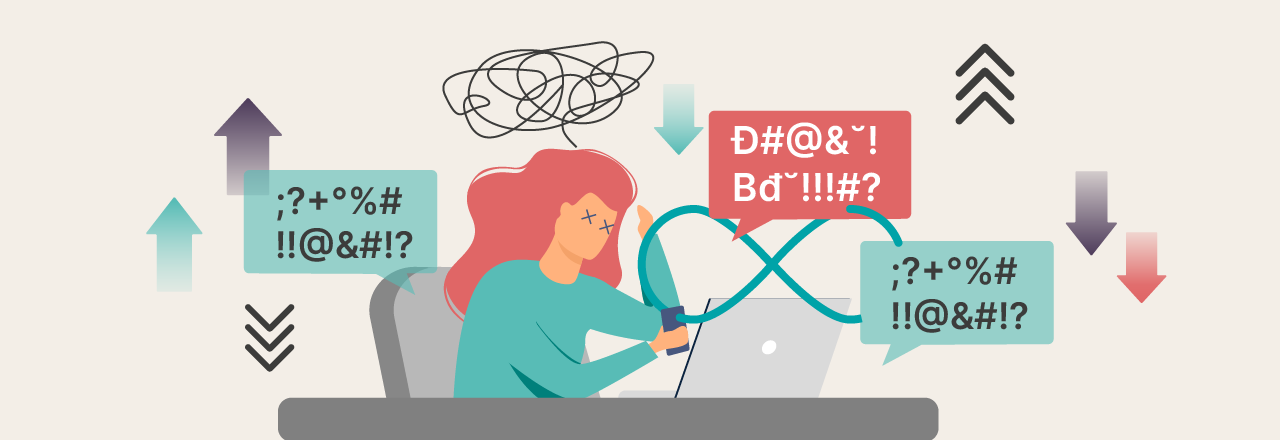
It is a common misconception that employees should be given the opportunity to chat with each other in order to work more efficiently. However, group chat is not the best solution for this, and I will prove it to you in a matter of moments.
Endless meetings
Group chat can be useful for quick, temporary coordination, but it is a poor substitute for an official internal communication channel. Across parallel groups, information becomes fragmented, difficult to retrieve, and impossible to track reliably. Management then expects both immediate responses and uninterrupted focus — a combination that creates distraction and communication overload.
The negative effects of group chat
1. Mental fatigue and exhaustion
You may have come across the image online showing a landline telephone with the following text: "when the telephone had a cord, people were free…" Back then people still knew, and practised, the rules of telephone etiquette, such as:
- a private number was only called between 8 in the morning and 8 in the evening, unless something was extremely urgent (e.g. some kind of emergency)
- even on work matters, people only called each other during working hours
However, in the era of mobile phones and various communication apps, fewer and fewer people observe the rules of telephone etiquette, if they are even aware of them at all.
According to one survey, for example, 49% of Americans are bothered by being contacted by phone too early or too late. This applies not only to calls, but to messages too. What is more, if these messages arrive within a group chat, it can be extremely disturbing when several members of the group send a comment. Just because you are not resting outside official working hours does not mean someone else does not want to.
Of course, you may say that a smartphone can be turned down or muted; however, this raises another problem.
2. Fear of losing the chance to have a say
You have surely heard the saying "silence means consent" before. Few things are more frustrating than accepting that the group made a decision with your presumed consent. People often think that the members of a group, even if they do not necessarily contribute to a conversation, are certainly following it in real time. So regardless of whether they speak up during the conversation or not, after the decision the members of the group point to the fact that "we discussed it in the group; if you do not agree, why did you not say so when you could have. It is too late now." That is why many people try to read every chat conversation immediately and, if the topic interests them or they are involved, respond straight away.
However, if an employee is in, say, 5-10 or even more different groups that are constantly beeping because of incoming messages, then it is impossible to work efficiently.
If you need feedback from colleagues regarding a decision, then do not handle it in a group chat. Instead, send out a short survey through CHEQ. This, on the one hand, does not disturb the work of those being asked and, on the other, no one influences anyone else's opinion. Because let's face it, during a group chat that everyone sees, a stronger personality can easily influence the opinion of the others and steer the conversation in an "invisible" way.

3. Impossible to search back
It may be convenient and quick to discuss matters in a chat, but days or months later it is almost impossible to search back for what was discussed and refer to it. The chat search may indeed bring up the conversation, but it is possible that you will only find part of it. It can also happen that several conversations took place on a similar topic in the chat room, so the search result is confusing, and even then you need to read hundreds of lines of comments to get the full picture.
Group chat is therefore not the most suitable for sharing important information and company announcements. Instead, create a knowledge base where employees can search back for important information in full.
4. It hinders efficiency
According to research, it takes about 23 minutes for someone to be able to fully focus again on what they were dealing with before they were interrupted. This means that if you are knocked out of your work only 4-5 times during a workday, the effectiveness of your work that day is already halved.
So the question is: which is more important to you? That employees carry out their tasks efficiently, or that they chat with each other? For sharing important company information, there is a more efficient solution than chat.
5. It carries business risk
You may have already heard the story of a former Google engineer who not only sent HR a memo with rather extreme views, but also shared it on the internal forums, which then became public thanks to a few kind colleagues who photographed it and shared it in open groups too. In the memo he set out his view that, in his opinion, the reason few women work in the IT sector is not that they suffer any kind of discrimination, but that women are not interested in the field. I probably do not need to tell you that this leaked memo stirred up a bit of a storm, and its author was forced to leave Google.
Then there is the famous PayPal incident, when the president's internal message became public, in which he openly and harshly criticised PayPal employees for not remembering their PayPal password and not using the app. In his message he suggested that these employees could even resign.
Although the messages mentioned above were not shared during a group chat, they nonetheless perfectly illustrate the dangers that unsupervised corporate messaging can bring. Reduce the risk and instead use a controlled two-way communication tool for sharing the most important messages.