
Multilingual internal communication is not the future but the present
Published
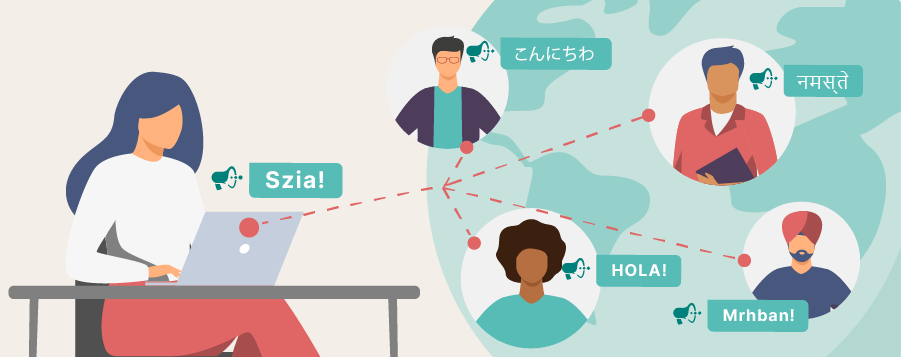
As an effect of globalisation, more and more businesses operate in Hungary that employ a significant number of foreign workers. Multilingual internal communication is therefore no longer a challenge of the future but of the present, in our country too. Fortunately, there is a technical solution to this business challenge that can be applied with real results. What's more, those results can even be expressed in numbers: using the right solution, we can cut company expenses and increase productivity.
The costs of traditional multilingual internal communication
While for employees working in an office environment at least conversational English or German could be called an expectation, this is not the case for blue-collar workers. Beyond that, we should not overlook the fact that more and more companies with foreign management or ownership are present in Hungary where the leaders themselves are not native English or German speakers. And of course, these managers often speak neither English nor Hungarian (well). As a result, communication is cumbersome and slow — not to mention that it is a breeding ground for misunderstandings, in the office just as much as on the shop floor.
To reduce communication misunderstandings arising from language barriers, companies often bring in interpreters and translators. The daily fee of external interpreters starts at HUF 45,000. The final price is influenced by the language (English and German are the cheapest, while Asian languages are the most expensive) and the type of interpreting (consecutive, on-site escort interpreting, etc.). And this amount often has to be multiplied, since a single interpreter cannot cover every task.
Beyond interpreter and translator fees, there are hidden costs too
Just think about it: without an interpreter's support, blue-collar workers cannot learn how to use the plant equipment accurately and on time. They cannot learn how the products are manufactured. Because of this, production stops, so the plant cannot generate revenue either. What's more, incorrect knowledge acquired in the absence of interpreters can even increase the number of workplace accidents. Besides posing a threat to life, this also brings unexpected expenses (medical care, PR/image management, compensation, litigation, etc.)
The likelihood of all this, however, can be reduced through properly designed multilingual internal communication supported by the right technology.
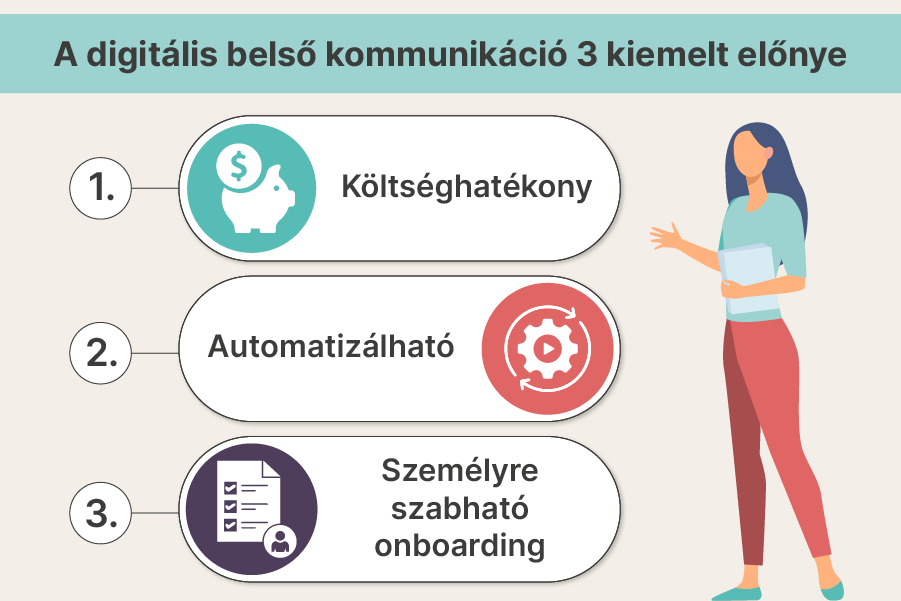
The 3 key benefits of digital multilingual internal communication
1. Cost-effective
It is enough to prepare the internal communication chatbot application to handle multilingualism once. In other words, you often only have to pay for this artificial knowledge once. On top of that, it can serve every employee of the company — even all of them at the same time. In contrast, if you had to rely on live interpreting and translation, then even with these people on your own payroll, they would still represent a loss for the company. Because instead of dealing with more important tasks (e.g. translating contracts and other business-critical documents, interpreting at negotiations, etc.), they would constantly be translating the same recurring day-to-day matters between colleagues. Yet this can be automated!
2. It can be automated
Digital multilingual internal communication can be automated. On the one hand, the chatbot applications used in internal communication can be trained to answer recurring questions in the language in which the question or request arrived. On the other hand, instant translation can also be automated. That is, it is enough to write your company announcements once, in one language, and the app translates them automatically. This way every colleague receives them in the language of their choice.
3. More personalised, faster onboarding
You no longer have to worry about how to onboard and train a new blue-collar employee when you do not share a common language. Language barriers can be overcome with a multilingual communication app. You can also make the mandatory training materials (e.g. fire safety and occupational safety) available in a language they will understand. In some cases, this can even save lives.
How digital multilingual internal communication pays for itself
We covered above where and how an application supporting multilingual internal communication helps save money. Now let's look at how it can increase the company's revenue.
According to surveys, companies where internal communication works well are up to 3.5x more successful than competitors struggling with internal communication problems. This often means a 22% increase in revenue.
In addition, O.C. Tanner's 2023 Global Culture report revealed that for 72% of employees it is important to feel like a member of the workplace community. For this, however, it is essential that employees from different cultural and linguistic backgrounds all feel equally valued. And by letting them receive information and handle work matters in their own language, we provide exactly that. This not only boosts morale but also builds a stronger bond between employees and the company. As a result, they stay in the company's service longer and contribute to growing its profit.
If you are open to the possibilities offered by digital multilingual internal communication and would like to learn more, get in touch with our experts!