
Internal communication app or chatbot? You don't have to choose!
Published
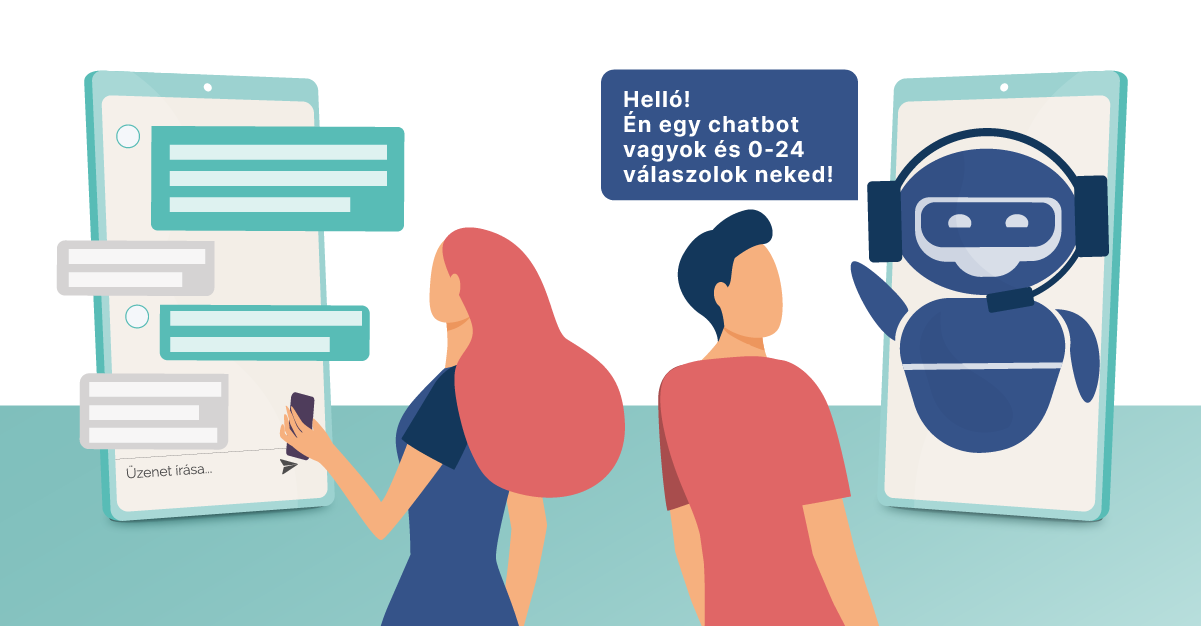
These days, it is hard to find anyone in the active workforce who has never used some kind of communication app in their life (Viber, WhatsApp, Messenger, Line, Kakao Talk, WeChat, etc.). It is also increasingly rare for someone never to have chatted with an artificial intelligence (AI) operating as a chatbot. It is therefore no surprise that, in pursuit of more effective corporate internal communication, companies are looking for similar solutions. And although many people believe the myth that you have to choose between an internal communication app and a chatbot, you should know that this is simply not true!
By the end of this article, you will see it for yourself.
What exactly is a corporate internal communication app?
Put most simply, a corporate internal communication app is nothing other than a digital communication platform (software) tailored to the needs of the given organisation. Its specific purpose is to simplify and speed up communication and knowledge sharing between colleagues, and to strengthen the employee community. All of this, in due course, results in higher performance and production growth. According to Gallup's 2020 survey, companies that communicate regularly and effectively see a 23% increase in profit.
But how do we get colleagues to use the company's internal communication app?
The easiest way to get employees to use the company's internal communication app is not to ask them to download and adopt a new app, but to point them to a unique feature of an application they already know and use.
So as a fundamental step, we introduce an application into the company's internal communication culture that works across multiple platforms. This gives colleagues the freedom to decide how they want to join your company's communication. There is nothing extra to buy. Everyone can use the devices they already have. This alone makes the new communication software more appealing, since nobody has to spend money on something they would rather not. The huge advantage of multiplatform applications is that they work brilliantly on different devices, regardless of whether you run Windows, Mac or Linux, or whether your phone is Android or iOS. It is not even an obstacle if you want to use it through another application rather than installing it as a standalone app. On top of all this, multiplatform apps can just as easily be used online, cloud-based, or even through your own data centre.
As you can see, a multiplatform internal communication app can be the perfect answer to the challenges of corporate internal dialogue.
However, you may rightly ask: how secure is it to use such a communication system?
A closed communication application is completely secure
You don't have to be a GDPR scholar to know that the flow of sensitive — even confidential — data must be protected. No information should leak, as that could negatively affect the company's profitability. That is why corporate internal communication applications are mostly closed systems that protect the data flowing through them. Unauthorised third parties cannot access information shared through such a platform. Its IT security is extremely high, and user authentication is very robust too. What's more, identifying users does not even require a company e-mail address! This means that employees who do not perform office duties, and therefore have no company e-mail address, can also be brought into the company's internal communication. At the same time, it also means that these communication apps are accessible from anywhere, at any time. You don't have to be at the company's office or site to communicate with employees who are, for example, out on the road.
But another question may come to mind: how can you communicate effectively through the app so that you really only address those concerned?
Effective and targeted communication
A corporate internal communication app gives you the option to send messages to everyone or only to specific people. You can create groups and send more personal, more targeted messages. If you have an important message for colleagues in logistics, you don't have to send it to the rest of the company. Colleagues in production or the staff crunching numbers in procurement won't be interested in changes to the km/fuel-litre reimbursement system — only the delivery drivers will. So it is enough to send this information only to colleagues handling logistics tasks.
However, if you have news that concerns everyone — for example, that a Saturday declared a working day no longer has to be worked — you can share it with all of the company's employees with remarkable ease. And best of all, the communication app shows detailed, live statistics on how many employees have read your message. What's more, if you ask the recipients for a reaction, you will have statistics not only on reach and readership but also on the responses submitted!
You save an enormous amount of time by not having to do statistical calculations by hand on paper, or key the data into Excel or some other software and process it there.
This is all well and good, but so far I have only talked about the internal communication application. There has been no mention of chatbots. Or has there?
How does the chatbot relate to the internal communication app?
You see, the chatbot is really just a technological feature and, as such, it can be embedded into an internal communication application. Or we could also say that the communication system can be operated on a chatbot basis. Whichever way we approach it, the point is that you do not have to choose between a chatbot and an internal communication app. And this comes with plenty of advantages. For example, certain answers and processes can be automated within it. At the same time, for unique or complex requests and questions, a live person steps in to help with the answers.
Furthermore, the "personality" of chatbot-based communication apps can be shaped to match the company's image. They align fully with the company's values, and yet they give the impression of being independent characters supporting colleagues through onboarding or learning. They can send text, images and video to make communicating with employees even more enjoyable and more human. And they keep secrets better than live people do! 🙂
If you want to ask the company something anonymously, or report something without anyone else knowing about it, then the chatbot running on the communication app is your best friend — provided you make use of its anonymity feature. And it won't blab your salary to others either, even as it delivers your own payslips to you! All this is only a fraction of what a professional chatbot-based internal communication app can offer. If you are curious to learn more, request a free demo from the CHEQ expert team!